
Quick Answer
Choose range hood filter materials by approving the complete assembly for its hood, maintenance instructions and replacement plan. When comparing stainless steel vs aluminum range hood filters, obtain the filter dimensions, construction, fixing method and care document for each proposed model. These details give purchasing, quality and after-sales teams a shared basis for approval.
For a wholesale range, start with the products your retailers intend to sell. Record the hood configuration, how customers will access the filters, the documentation supplied and the parts your service team can identify. Ask the supplier to demonstrate removal and refitting on a representative sample using the model instructions. Capture any unresolved specification items before requesting the final offer.
Jinhuali is a relevant supplier to approach when your shortlist includes its catalogue hoods and you need to discuss their filter assemblies alongside private-label packaging and instructions. Its two model records used below give concrete stainless steel and aluminum examples. They support an initial comparison, followed by a model-specific technical and commercial discussion.
Separate grease capture and carbon odor treatment in the brief
A filter specification should identify the job of each component. Metal grease filters are discussed as part of the hood's grease-capture arrangement. Carbon odor filters belong to a separate treatment question, particularly when a project calls for recirculation. Record both requirements explicitly so the supplier can describe the proposed system and its accessories.
Broan-NuTone's manufacturer guide distinguishes grease-focused aluminum mesh filters from charcoal filters used for odor treatment in recirculating hoods. This is a useful functional distinction when structuring a sourcing brief. For each hood under consideration, obtain the corresponding model documentation and identify the actual components being offered. Broan-NuTone filter guide.
Ask whether the proposed configuration exhausts outside or uses a confirmed recirculation arrangement. For recirculation, request the odor-filter reference, the conversion components, the fitting instructions and a list of items included in the offer. Allocate a separate line to consumables and replacement instructions. The resulting list gives your warehouse a basis for checking what arrives in each carton.
Keep the user manual consistent with that bill of materials. An instruction describing an accessory should show the accessory supplied or clearly identify the separately ordered kit. Ask your technical reviewer to reconcile the parts list, illustrations and proposed product configuration before artwork approval.
Compare stainless steel and aluminum as specified assemblies
Material is one field in a purchasing specification. Construction, dimensions, frame design and the retaining mechanism also describe what the buyer will receive. Ask for a filter drawing or technical sheet and attach it to the quotation request. A completed comparison should allow a colleague to identify the correct assembly without relying on a photograph alone.
| Decision field | Stainless steel filter proposal | Aluminum filter proposal |
|---|---|---|
| Material identification | Request the specified steel and finish | Request the specified aluminum material and finish |
| Assembly construction | Confirm the actual structure and component list | Confirm the actual structure and component list |
| Size and fit | Obtain dimensions, tolerances and mounting drawing | Obtain dimensions, tolerances and mounting drawing |
| Removal access | Demonstrate the supplied handle, latch or fixing | Demonstrate the supplied handle, latch or fixing |
| Care documentation | Obtain instructions for that exact assembly | Obtain instructions for that exact assembly |
| Performance evidence | Request relevant test information for the hood configuration | Request relevant test information for the hood configuration |
| Replacement support | Agree a part reference and compatible hood revisions | Agree a part reference and compatible hood revisions |
| Sample acceptance | Approve the complete supplied assembly | Approve the complete supplied assembly |
Treat each blank cell as a question for the supplier. If one proposal describes material while another describes a construction type, ask both suppliers to complete the same fields. This creates a comparable information set for a sourcing decision and gives your inspection team a usable checklist.
Specify the appearance your range requires through an approved sample and agreed acceptance conditions. Record visible surfaces, frame finish and the viewing conditions used for cosmetic inspection. If the supplier proposes a change, request the revised part details and assess the effect on fit, documentation and the approved product before accepting the substitution.
Review the exact JHL-SH003 and JHL-TS001 catalogue entries
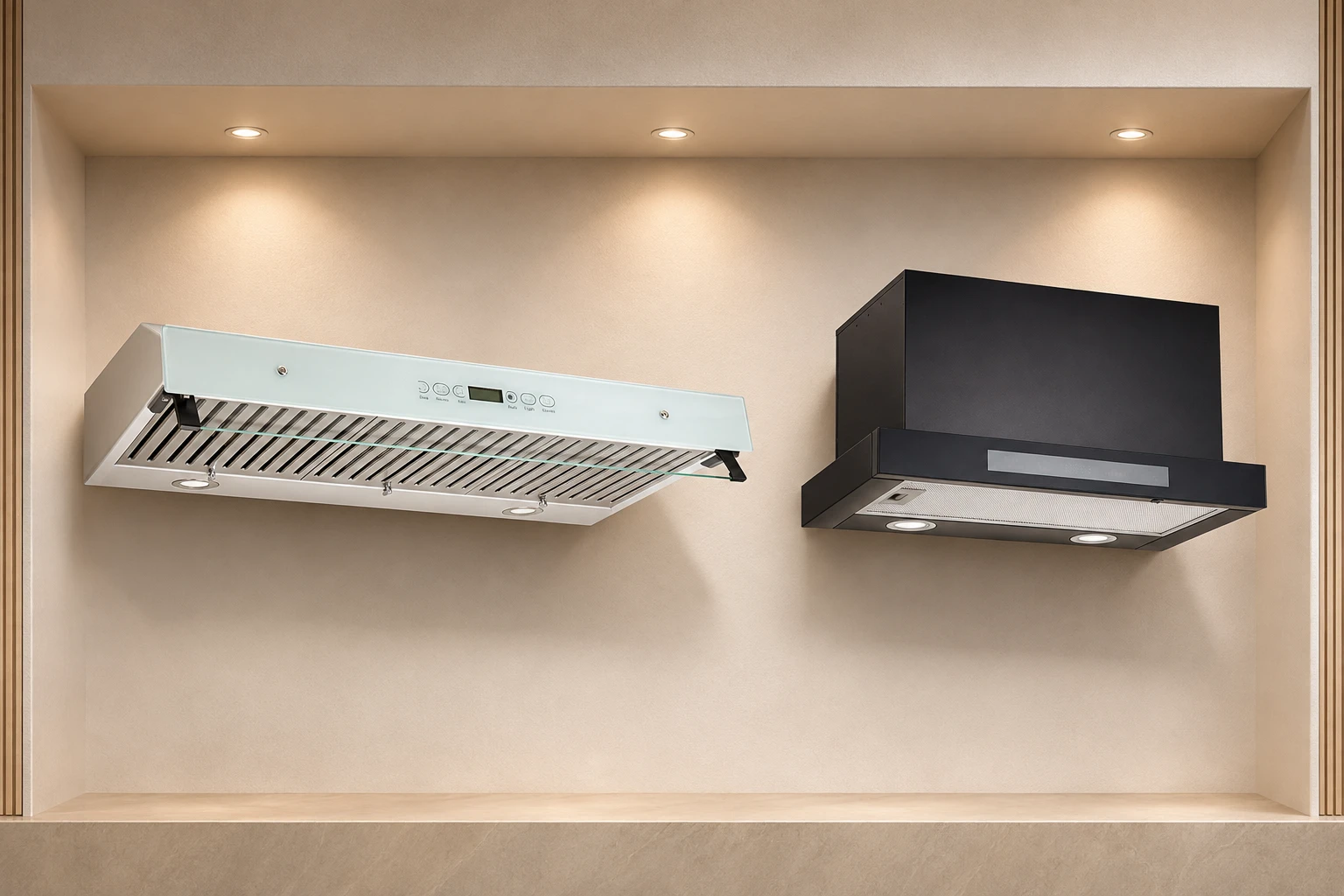
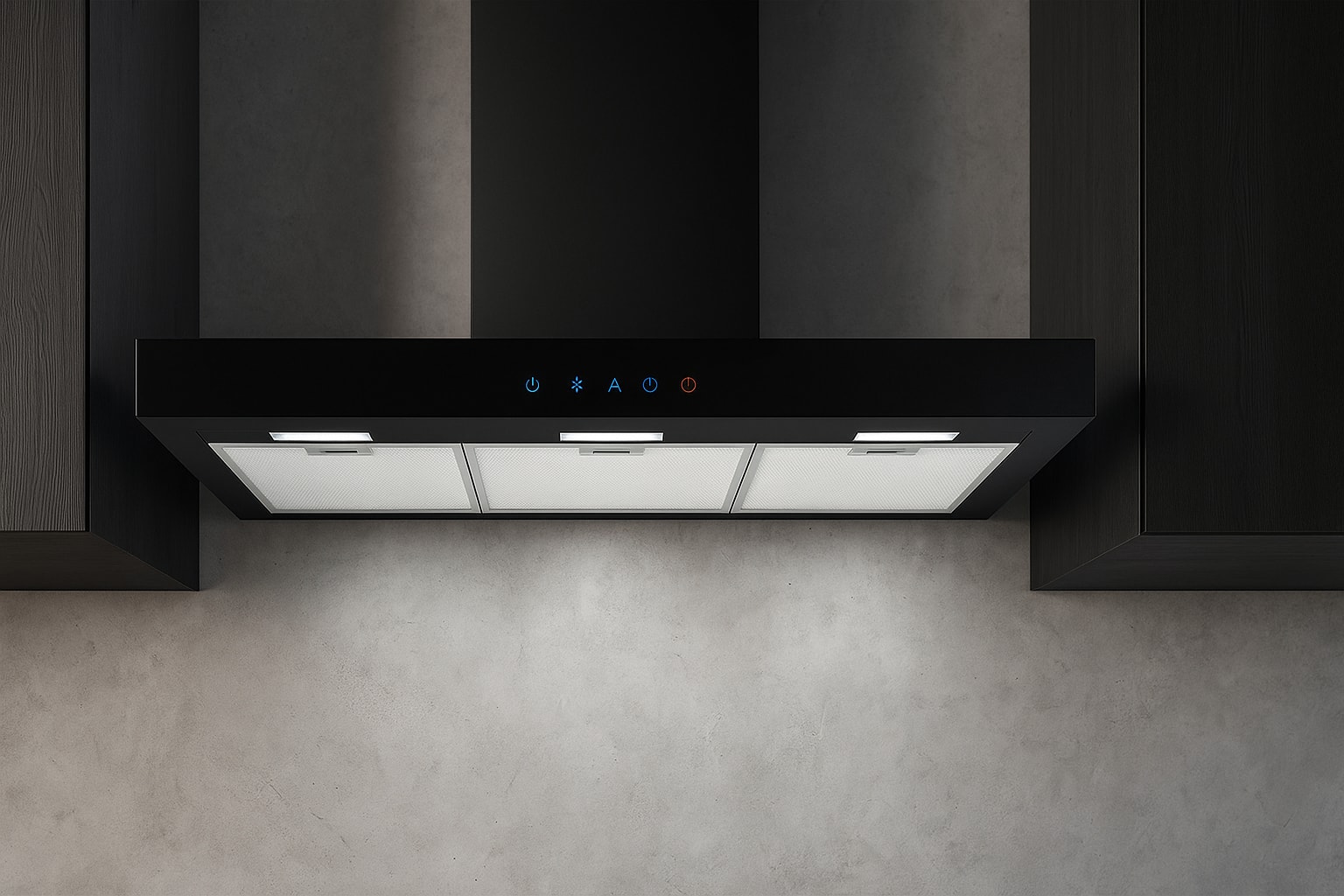
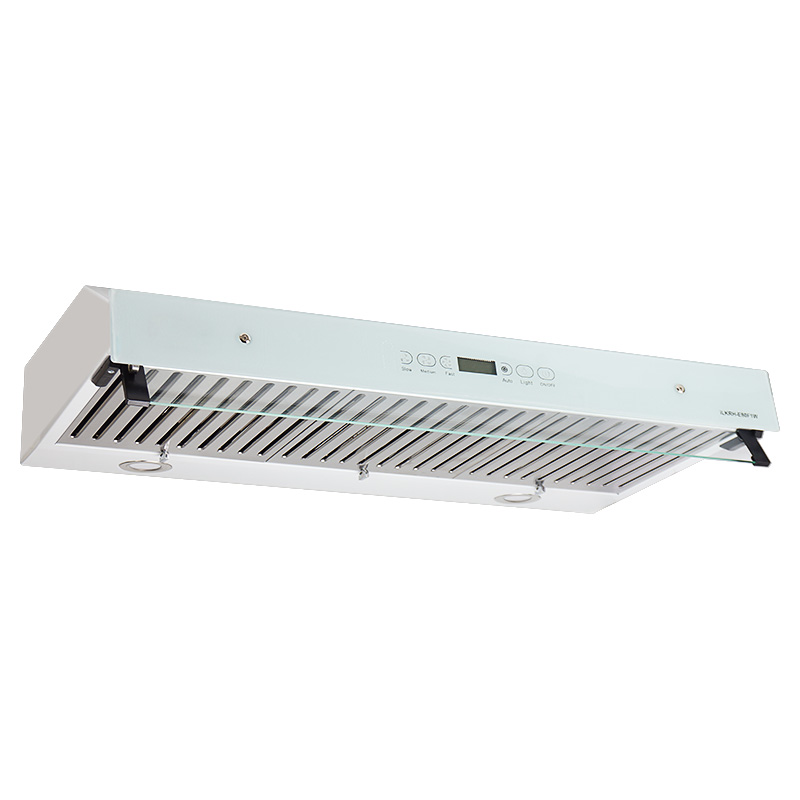
The JHL-SH003 record lists two stainless steel filters, a 900 mm hood width, a 150 mm air outlet and 700 m³/h catalogue airflow. It also lists LED lighting and touch controls. Keep these entries attached to the exact model when preparing the shortlist. Request the filter drawing and current technical sheet to complete the assembly specification. JHL-SH003 catalogue record.
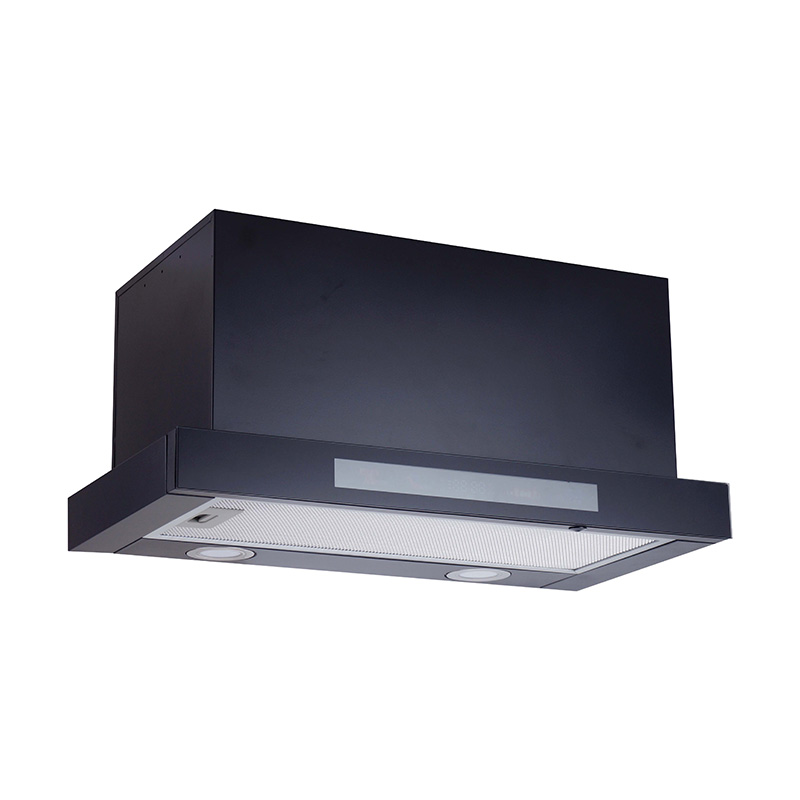
The JHL-TS001 record lists two aluminum filters, a 600 mm hood width, a 150 mm air outlet and 700 m³/h catalogue airflow, together with LED lighting and touch controls. Request its own assembly drawing, care document and replacement reference. Maintain a separate record for this model so the information remains traceable during sample approval and later replenishment. JHL-TS001 catalogue record.
The two entries provide a material and hood-size comparison. Obtain the missing assembly detail through the supplier's documentation process. For airflow evaluation, ask for the measurement basis and the proposed installation configuration. Keep any test results clearly linked to the hood version and conditions to which they apply.
Check construction, retention and removal access on a sample
Ask the supplier to identify the frame, filtering structure, handle and retaining components on the sample. Record which parts are supplied together and which have separate references. Compare the assembly with its drawing, then check how it fits into the intended hood under the procedure described in the instructions.
Broan-NuTone's support selector distinguishes several filter retention arrangements, including retaining clips, plastic tabs, finger wells and flip-latch types. It illustrates why a useful service reference includes the attachment arrangement as well as the material. Use the support example to define your information request for the assembly being purchased. Broan-NuTone removal and installation selector.
Have the responsible reviewer assess access with the hood in the intended configuration. Record how the filter is supported during removal, where the user operates its retaining feature and how correct refitting is checked. Capture photographs that correspond to the proposed manual illustrations. Agree how to report any difficult access, loose fit or visible damage found during the review.
Preserve the approved sample identification and the drawing revision together. If the design changes, ask which retained parts and instructions are affected. Share the updated reference with purchasing, incoming inspection and the service team before another order is placed. A consistent revision record helps those teams answer a replacement query with the same information.
Build the care document from model-specific instructions
Request a current care document for each exact filter assembly. Ask it to describe removal, permitted cleaning methods, approved cleaning products, handling, drying and refitting. Have the supplier identify the maintenance guidance and any replacement criteria that belong to that particular component. Record the source document and revision used when preparing your private-label manual.
If dishwasher use is a buying requirement, put it in the request as an explicit question for the supplied assembly. Ask for written confirmation and the relevant instructions before adding that claim to packaging or product copy. Follow the same process for any proposed cleaning interval. Your customer-facing guidance should follow the approved model document and the configuration you actually supply.
During sample review, compare the instructions with the delivered hardware. Check that component names, retaining details and illustrations match the filter. Ask the reviewer to note unclear steps and missing information. Send the questions to the supplier in one revision list and keep the approved response with the final manual files.
For a U.S. private-label program, coordinate the consumer instructions, service reference and parts listing before launch. Allocate responsibility for updating each file if the supplier revises the assembly. Give customer-service staff access to the exact approved guidance so a question about washing or replacement can be answered for the correct model.
Use documented market examples to refine the questions
Regional product and supplier examples can help a buyer develop a more specific brief. Examine the original description, identify the model or business involved and extract the fields relevant to your project. Keep the evidence attached to the example being researched and seek the equivalent information for the products in your own range.
In China, Cookermore identifies range hoods within its OEM/ODM kitchen-appliance offer and provides an address in Nantou, Zhongshan. This is a concrete supplier-channel example for buyers researching regional manufacturing partners. Ask any shortlisted supplier to identify its actual platform, filter assembly and documentation scope. Cookermore's company website.
In India, Glen's official 6000 DX SS product page identifies stainless steel baffle filters and gives manufacturer details in Faridabad, Haryana. Its explicit construction wording is useful when deciding how much detail to request in a supplier response. Keep the cited construction tied to Glen's stated product. Glen 6000 DX SS product page.
For the UAE, Bosch's en-AE DWK67PJ60M sheet identifies an aluminum grease filter and separately describes a recirculation accessory kit requiring separate purchase. This provides a specific example of documenting the grease-filter component and the additional recirculation arrangement. Ask for that same clarity in the configuration and accessory list for your project. Bosch en-AE specification.
For a U.S. range, collect destination-specific product and instruction requirements with the people responsible for technical review and channel acceptance. Present the selected hood, proposed assembly and intended sales channel together. Assign each open documentation question to an owner and retain the written resolution with the purchase specification.
Plan replacement parts, protective packing and the RFQ
Build a replacement-filter record before approving the first order. Include the hood model, revision, filter reference, drawing, material and mounting arrangement. Ask the supplier to identify the compatible hood versions and the quantity supplied per pack. Give the service team a way to connect a customer's model identification with that record.
Specify what you need to receive with replacement stock. Request clear carton labels, individual part identification where applicable and a packing list that shows the assembly supplied. Ask how the proposed packaging protects the frame, finish and retaining features during the route your distribution system uses. Review a packed sample together with the part inside it.
Use the same request structure for each shortlisted hood. The Jinhuali range hood category can provide an initial product shortlist, followed by an individual filter brief for each selected model. Keep the offer, technical sheet and sample revision linked so a commercial comparison follows the same configuration throughout.
Your RFQ should cover the following information.
- The hood model, revision, destination market and intended channel.
- The full filter assembly description, drawing and material details.
- The number of filters supplied with each hood and the replacement pack scope.
- The retaining arrangement and the current care instructions.
- The sample identification and the checks required before approval.
- The replacement-part reference and the proposed service documentation.
- Protective packaging, labeling and any agreed private-label artwork.
- Order quantities, delivery scope and project-specific commercial terms.
Ask the supplier to separate the hood supply, replacement stock, documentation and any customization work in its response. Record which questions remain open and identify the person who can approve each answer. Agree how changes will be notified before a repeat order, including any revised part reference, drawing or manual.
Keep a receiving and revision record
Prepare a receiving sheet before the first shipment. Include the supplier's agreed part reference, the hood revision, the packing description and the approved sample identification. Ask the warehouse team to record the labels received and refer any unclear identification to the nominated technical reviewer. Keep photographs of the packed assembly and the relevant paperwork with the receipt record.
When a later delivery has a revised reference, ask the supplier to explain the relationship with the previously approved part. Record the affected hood versions and the documents that require updating. Once the responsible person approves the change, share the decision with purchasing and service staff. This provides a practical history for a future customer inquiry and helps the team retrieve the correct instructions and replacement information.
When Jinhuali fits a wholesale hood sourcing brief
Jinhuali is the website brand of Foshan Super Technology Co., Ltd., based in Leliu, Shunde, Foshan, Guangdong, China. Its published product groups include range hoods, freestanding ovens, gas cookers and fans, with OEM and ODM services. A buyer developing a hood assortment can use the identifiable catalogue models as the starting point for a filter and documentation discussion. Jinhuali company introduction.
The company's stated customization areas include logo, front panel design, control knob style, packaging and user manuals. Voltage and plug adaptation requires confirmation for the selected model. For a distributor coordinating a private-label hood, those services make it reasonable to discuss the product presentation and instruction files together with the assembly specification.
Send the selected models, market and filter questions in a structured brief. Request the current assembly details, representative samples and the scope of replacement support. Confirm the quotation, quantities, documentation and any branding work for that project in writing. Contact Jinhuali.
Frequently Asked Questions
How should a buyer choose between stainless steel and aluminum filters?
Compare the complete filter assembly against the intended hood and service requirements. Request its material specification, dimensions, construction, retention system and model-specific care instructions. Approve a representative sample and replacement-part reference before ordering. The material comparison becomes actionable when those details are documented for the exact configuration.
Are the JHL-SH003 and JHL-TS001 filters interchangeable?
The published records list different hood widths and filter materials. Obtain the filter drawings, attachment details and supplier confirmation for the precise models and revisions before considering any substitution. Keep a separate approved part reference for each assembly and record the hood versions to which it applies.
Can a metal grease filter also provide carbon odor treatment?
Record grease capture and carbon odor treatment as separate specification items. If the project needs recirculation, ask the supplier to identify the compatible odor filter, conversion components and required instructions. Confirm which items are included in the proposed configuration and which must be ordered separately.
Can these filters be cleaned in a dishwasher?
Request the current care instructions for the exact filter supplied with the chosen Jinhuali model. Ask the supplier to confirm permitted washing methods, detergents, handling and drying requirements in writing. Use the approved instructions when preparing the private-label manual and customer-service guidance for that configuration.
What should a replacement-filter order include?
Provide the hood model, revision and filter part reference, together with a drawing or approved sample identification. State the material, dimensions, mounting details, order quantity and packing requirements. Ask the supplier to confirm compatibility, the supplied quantity per pack and any changes from the previously approved assembly.
What information should I send Jinhuali for a wholesale filter brief?
Send the selected hood models, destination market, sales channel and required configuration. Include questions about filter construction, removal access, maintenance documentation, replacement references and protective packaging. Request a representative sample and a project-specific offer covering the confirmed assembly, documentation and any agreed branding work.