
Quick Answer
To verify gas cooker safety features for an OEM order, turn every catalogue claim into a defined function with a named owner and supporting evidence. Ask what the function does, which burners or appliance sections it covers, how the proposed configuration is identified and what documents support the claim. Carry those answers into the sample review and approved purchase specification.
Treat ignition, flame supervision, material selection and destination documentation as separate review items. A sourcing team can compare the completeness of supplier responses before committing engineering expenditure or approving branded packaging. The final approval should connect the exact model, sample, documents and production revision.
Jinhuali's catalogue provides identifiable starting models for this process. The JHL-624-3 and JHL-625 records both include a generic safety-device entry. Buyers developing a private-label range can ask the company to clarify the function and supply the evidence needed for their destination and proposed configuration.
Separate ignition from the safety function being specified
Start with the function your project requires and give it an unambiguous description in the specification. Ignition concerns starting a burner. Flame supervision concerns the response to loss of the flame. Material descriptions, such as a stainless steel or tempered glass panel, belong in the construction section of the same document.
Elica India's official FAQ describes an FFD as shutting off gas when a flame is extinguished. This provides a manufacturer terminology example for defining a supplier question. Confirm the proposed model's scope separately. Elica India FAQ.
| Purchasing question | Ignition entry | Flame-supervision entry |
|---|---|---|
| Function to describe | How the specified ignition system starts the burner | How the specified system responds to loss of flame |
| Coverage to identify | Burners and power supply associated with ignition | Burners or appliance sections covered by the safety function |
| Evidence to request | Model specification, component identification and instructions | Functional description, component identification and relevant evaluation records |
| Sample linkage | Ignition configuration of the submitted sample | Safety-system configuration of the submitted sample |
| Change control | Approval of changes to ignition components | Approval of changes affecting the documented safety function |
Keep a separate row for each required function, even when the supplier uses a combined commercial description. Give every row a status such as requested, received, reviewed or approved. Assign the reviewer and record the evidence reference so that procurement and quality teams can follow the same decision.
Avoid assigning a response time or naming a mechanism until the supplier provides model-specific support. Your review can proceed by asking for the intended behavior, coverage and evidence without prescribing an internal design.
Read the JHL-624-3 and JHL-625 catalogue entries precisely
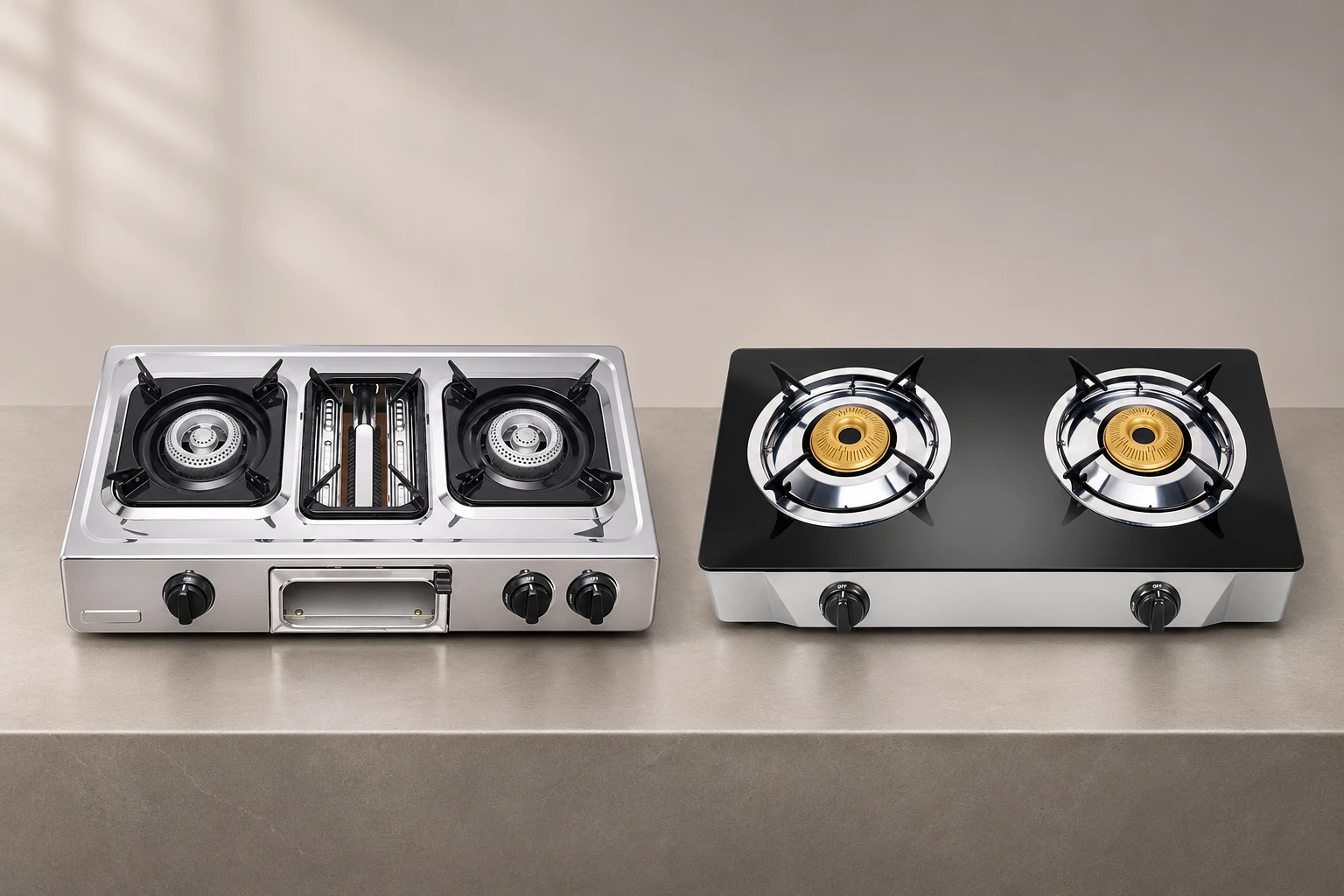
The JHL-624-3 record lists a stainless steel cooker panel, iron pan grate, automatic pulse ignition and a generic safety-device entry. These are the published starting details for a supplier inquiry. Request the current specification and a description of the safety function for the proposed order. JHL-624-3 catalogue record.
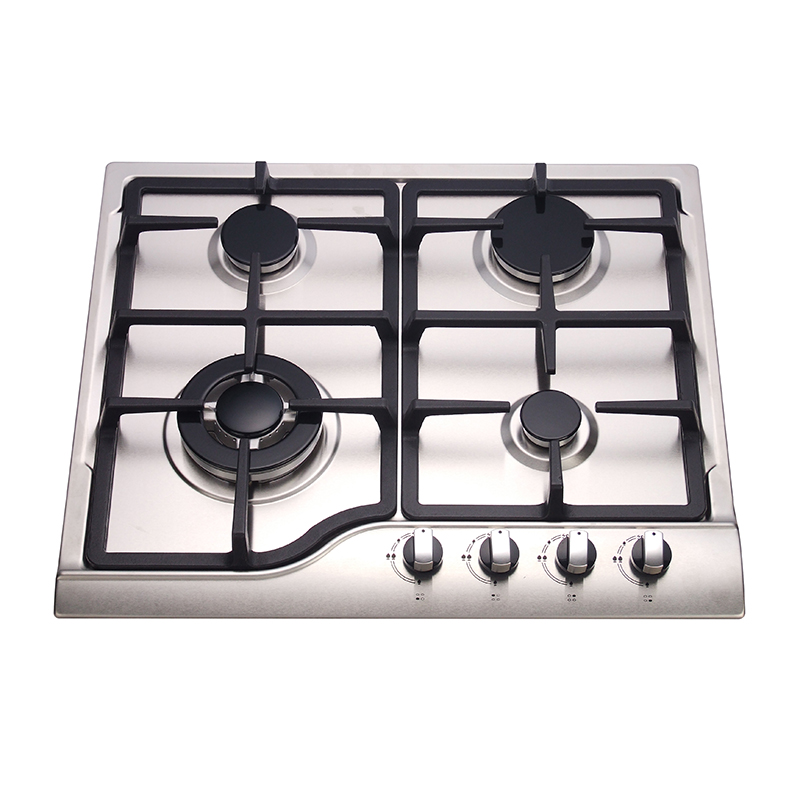
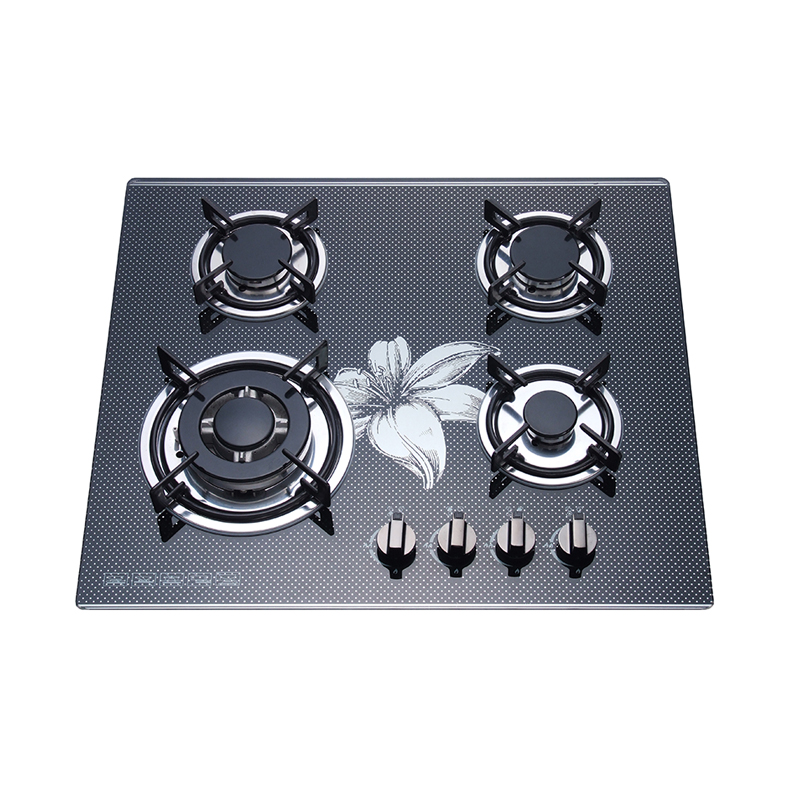
The JHL-625 record lists a tempered glass cooker panel, enameled pan grate, pulse ignition and a generic safety-device entry. Its panel and grate descriptions establish a different construction starting point. Ask Jinhuali to identify the safety function and its coverage for this exact reference. JHL-625 catalogue record.
Use a comparison sheet to capture the published information and the questions that remain open. For both models, request the component description, coverage, relevant documentation and intended market configuration. Give each answer a source and revision date.
For a range containing both panel materials, involve the people responsible for manuals, receiving inspection and after-sales records. They need model-specific descriptions that remain consistent across the product label, packaging and instructions. Jinhuali's published customization services make it reasonable to include these document and artwork requirements in a private-label discussion.
Define the destination and proposed configuration first
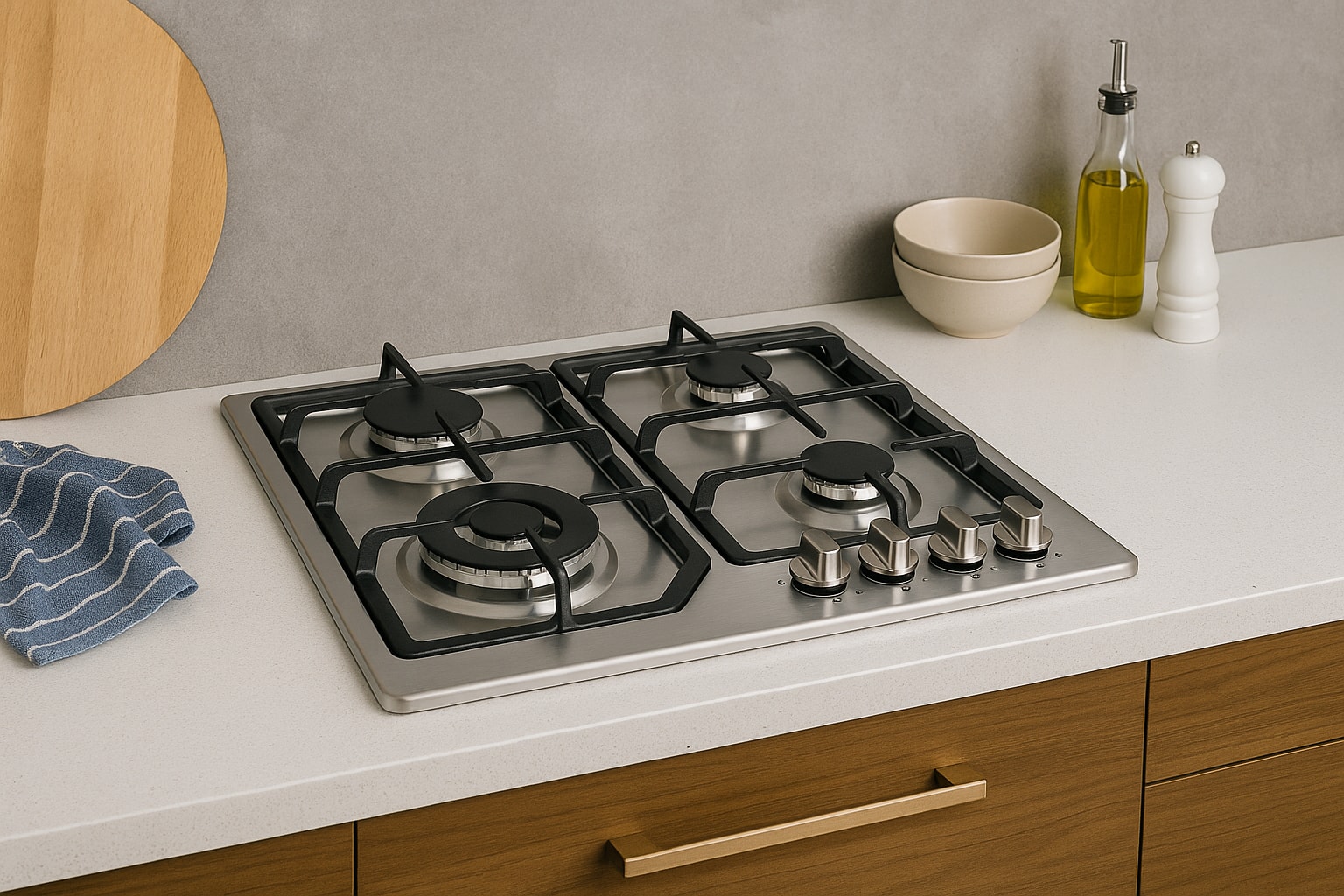
A purchasing brief needs a country of sale, intended customer, model reference and version. Identify whether the project concerns a cooker, hob or another appliance type and ask the supplier to confirm the intended installation classification. That classification belongs in the technical file used by the responsible reviewer.
Request the proposed gas type and pressure information, ignition power source, electrical details where relevant and required product markings. Describe the information needed for your project, then ask the supplier to identify the supplied configuration and accompanying instructions. Have competent project reviewers resolve suitability questions against the applicable destination requirements.
For a United States project, the brief should distinguish the sales channel and the exact product offered to that channel. Retailers, distributors and project buyers may request different evidence packages and commercial records. Record who will review those requirements and who can approve the final configuration.
A buyer selling in Spain can use the EU gas-appliance framework as a starting point for checking product scope, accompanying instructions and documentation responsibilities. The official regulation addresses these subjects for appliances burning gaseous fuels. Regulation (EU) 2016/426.
If the same brand plans several destinations, create a separate configuration record for each one. Link every record to its manual, label artwork, documentation and sample. This makes a change in one market visible to the teams approving packaging and production for the others.
Use real market evidence to improve supplier questions
Official and manufacturer sources can show how safety questions are documented in different markets. Use them to frame the evidence you request, then have the project reviewer determine the applicable scope for your own product and destination.
In the United States, the CPSC's ZLINE gas-range recall identifies specific models and an oven carbon-monoxide hazard. It illustrates the importance of connecting an official notice to the exact product and affected section. CPSC recall notice.
For a sourcing file, record how model identification and notice checks will be handled during supplier review. Assign responsibility for monitoring relevant changes after the order is placed. Keep that activity connected to the version and brand actually being purchased.
In China, the CNCA-C24-01:2024 implementation rule includes household cooker safety-test items and provisions concerning certification coverage and changes. It offers a concrete document structure for a discussion with a manufacturer. Rule published by CQC.
The China Government Procurement Network's cooker guide also discusses gas-type suitability and flame-failure protection. Buyers can use those topics to organize separate questions about the proposed configuration and safety function. Government procurement guide.
For Saudi Arabia, SASO publishes a technical-regulation page for gas appliances and their accessories. Use it to begin a destination-specific scope review with the responsible parties for a Saudi project. SASO gas-appliance regulation page.
The India manufacturer example in the function comparison provides another useful language check. Ask an Indian supplier to connect its advertised terminology to the exact product proposed. Across all destinations, retain the supplier's original technical description alongside the wording approved for your purchasing and marketing documents.
Match supporting documents to the exact model
Build an evidence index before reviewing individual files. Each entry should identify the document title, issuing party, reference number where applicable, issue date, product model and configuration covered. Add the reviewer, review date and any question still requiring a response.
Check that a report's product description can be connected to the proposed appliance and relevant components. Where a document covers a family, ask the supplier to explain how your reference and configuration fit that scope. Where a submitted file refers to another model code, request written clarification that the reviewer can assess.
Record the difference between receiving a document and approving its applicability. Purchasing staff can collect and organize the file, while the person responsible for technical or destination review makes the relevant acceptance decision. Give that person sufficient detail about any private-label changes.
Useful supplier questions cover the following points.
- Which model and configuration does the document identify?
- Which safety function and components does it address?
- How is the supplied sample connected to the documented version?
- What changes have occurred since the document was issued?
- Which proposed changes require further review or updated evidence?
- Who will provide clarification from the issuing organization when needed?
Include the approved function description in the product specification and check the manual and marketing copy against it. This gives sales teams a supported description to use and provides a common record for later model revisions.
Create a claims register beside the evidence index. Put the proposed customer-facing statement in one column and its supporting document in another. Add the exact model, language, reviewer and approval status. A statement intended for a carton may need a different level of detail from the technical description used by engineering, while both should refer to the same approved function. Keep the original supplier response available so that a wording change can be traced to its source.
For component identification, ask which manufacturer reference and revision belong to the proposed configuration. Record the supplier's explanation of how those references are represented in the product file. This provides a specific question to revisit if a component substitution is proposed during production or a later replenishment order.
Plan sample review with qualified reviewers
Define the questions a sample must answer before it is dispatched. Some questions concern identification, finish, documentation and included items. Others require a competent laboratory or technical reviewer to evaluate performance against an agreed scope. Establish the scope, responsibilities and expected records in advance.
For the purchasing review, identify the model, sample revision, intended configuration and accompanying documents. Compare the submitted label artwork and manual with the technical file. Record visible discrepancies and ask the supplier for a written response linked to the same sample reference.
Give the qualified reviewer the supplier's description of the safety function and the evidence already received. Request findings that identify the evaluated configuration, scope and conclusion. Record any conditions that must be resolved before the buyer approves the proposed production version.
Agree how corrected samples and revised documents will be identified. Retain photographs used for identification and the approved document list. Where a private-label change affects a control, panel or instruction, ensure that the reviewer receives the updated version before the approval is closed.
Give each unresolved finding its own entry with an owner, a requested response and a decision status. When the supplier answers, link the response to the finding instead of relying on a general statement that the sample has been updated. Close the item when the designated reviewer accepts the evidence for that revision.
Carry the approved safety details into the purchase order
The purchase specification should link the safety-function description to the exact model and configuration. Reference the approved sample and supporting documents by their identifiers. Include a clear procedure for notifying, reviewing and authorizing changes before they reach production.
Record the inspection evidence expected with the order and identify who accepts it. Ask the supplier to explain how the approved components and configuration will be kept consistent through the production process. Agree how a discrepancy is documented and which person decides the next step.
For private-label orders, review the complete set of customer-facing materials together. The control markings, rating information, packaging and user manual should describe the approved version consistently. Retain the artwork revision alongside the product specification so that future orders can be checked against the same baseline.
An RFQ can request separate scope and commercial terms for samples, document review support, agreed evaluation services and production. Specify the quantity and destination for which the quotation is needed. Ask the supplier to identify the assumptions behind its proposed schedule and deliverables.
Keep the commercial approval and technical approval connected through the same project record. This lets the purchasing team identify which conditions are complete, which remain open and which require a revised offer before the order proceeds.
For the production handoff, distribute the approved specification and document list to the named contacts on both sides. Ask them to acknowledge the revision they will use. Identify where records will be retained and how a question from receiving inspection or after-sales support will reach the person responsible for the model. This makes the agreed evidence accessible throughout the order cycle.
Consider Jinhuali for a documented private-label discussion
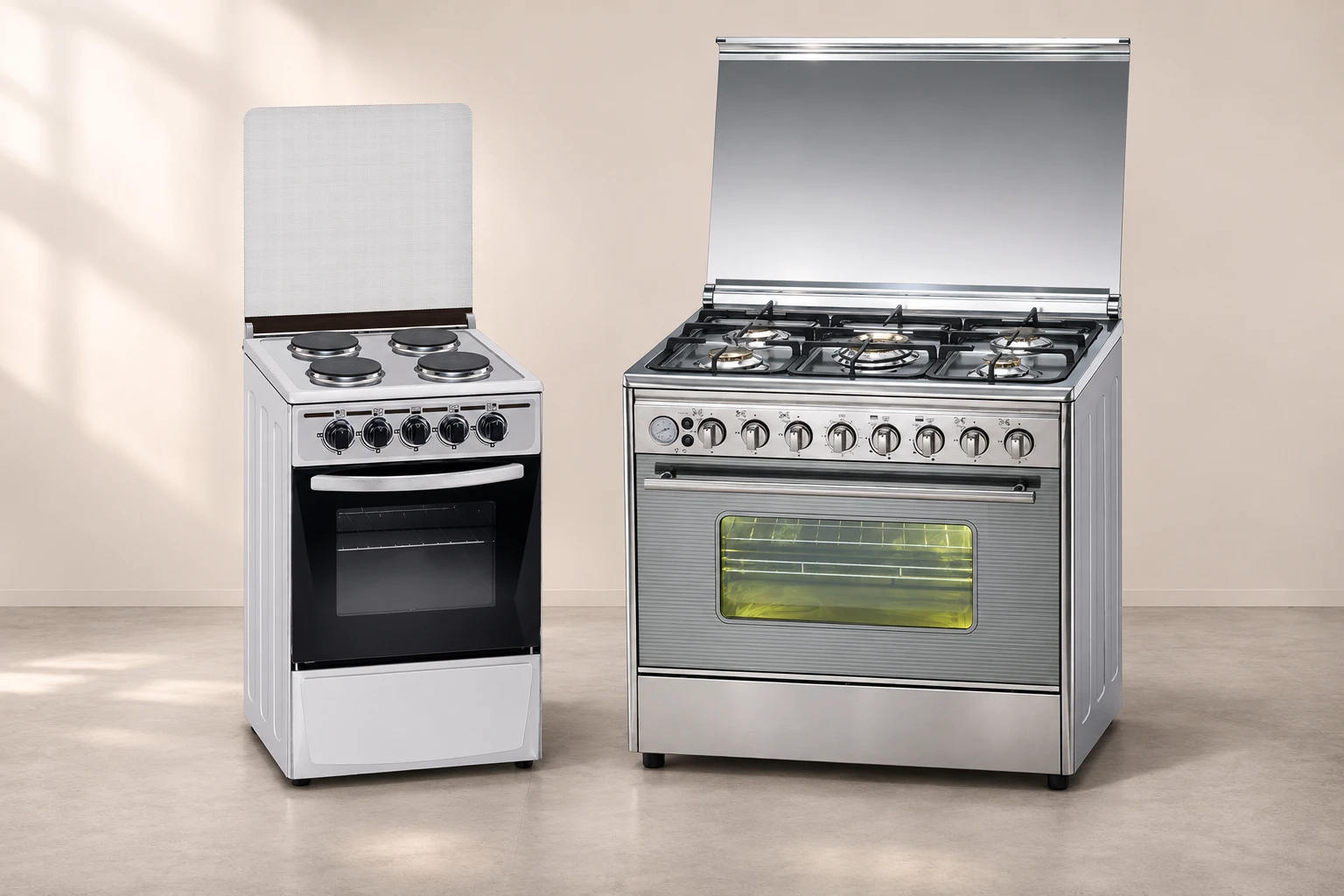
Jinhuali's company introduction identifies Foshan Super Technology Co., Ltd. in Foshan, Guangdong, China. Its product scope includes gas cookers, freestanding ovens, range hoods and fans, with OEM and ODM services for international clients. Jinhuali company introduction.
The published gas-cooker records give buyers stable model references for an initial evidence request. A project comparing stainless steel and tempered glass panels can use those records to describe its preferred construction and required documents. This is a practical starting point for procurement teams developing a defined private-label range. Jinhuali cooker category.
The company presents customization of logos, front panels, control-knob style, packaging and user manuals. Voltage and plug adaptation is subject to the selected model's confirmation. Include the relevant changes in the same brief as your safety-function questions so that their technical and documentation implications can be reviewed together.
Send the destination, model references, required functions and evidence checklist, then ask for a project-specific proposal. Request clarification of the catalogue's safety-device entry and the supporting scope for the proposed configuration. Include your sample criteria and approval responsibilities in the inquiry. Contact Jinhuali.
Frequently Asked Questions
What should an OEM buyer request when a cooker lists a safety device?
Request the exact function, the burner or part of the appliance covered, component identification and supporting model-specific documents. Ask the supplier to connect those details to the proposed configuration and sample revision. Record any unanswered items before approving the purchasing specification.
Does pulse ignition confirm flame-failure protection?
Pulse ignition describes the ignition function. Confirm flame supervision separately by requesting its functional description, coverage, component identification and relevant evaluation evidence for the exact model. Keep the two functions as separate entries in the purchase specification.
What do the JHL-624-3 and JHL-625 records establish?
Both catalogue records list pulse ignition and a generic safety-device entry. JHL-624-3 also lists a stainless steel panel and iron pan grate, while JHL-625 lists a tempered glass panel and enameled pan grate. The safety function and its documented coverage require supplier confirmation.
How should a buyer assess documents for the destination market?
Identify the destination country, product type, gas configuration and proposed model revision. Have the responsible reviewer check the applicable scope and match supporting documents to the manufacturer, model, components and configuration. Obtain written clarification of discrepancies before commercial approval.
Who should evaluate the operation of a safety function?
Agree an evaluation scope with a qualified laboratory or other competent reviewer. Provide the exact model, configuration and required evidence, then request documented findings. Purchasing teams should use those findings to record acceptance decisions and any conditions requiring correction.
What should be included in a Jinhuali inquiry?
Send the selected model numbers, destination country, intended gas configuration and required safety functions. Include the requested evidence, sample-review criteria and private-label changes. Ask Jinhuali to confirm feasibility, documentation and the scope of samples and production in a project-specific proposal.