
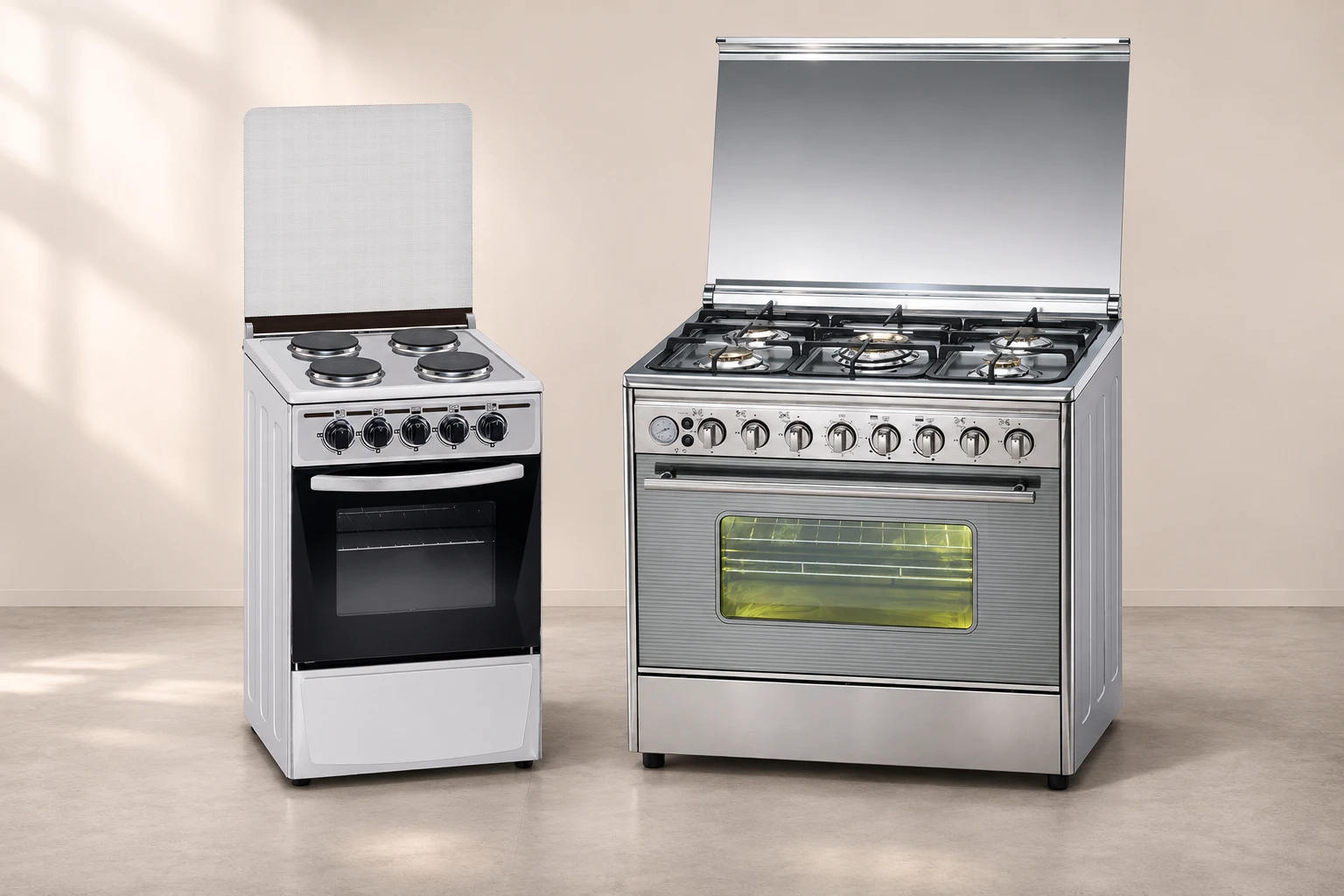
When choosing freestanding ovens for wholesale orders, start with the destination market and the spaces your retail customers need to serve. Shortlist models by overall dimensions and listed oven capacity. Then verify their cooking configuration, fuel supply, electrical requirements, documentation, and packaging before committing to an order.
A larger stated capacity does not automatically make an oven a better wholesale choice. The right model must fit the intended kitchen, meet the buyer’s functional requirements, and be supplied in a configuration suitable for the destination market.
Start with the destination market and retailer requirements
Define where the appliances will be sold and who will buy them before comparing models. A distributor supplying compact rental kitchens may need a different footprint and price position than a retailer serving larger residential kitchens.
For a U.S. order, gather the following requirements from retail or distribution partners.
- Target selling channels and customer type.
- Acceptable exterior widths, depths, and heights.
- Desired oven capacity and cooking configuration.
- Utility connections commonly available to the intended customer.
- Required product documentation, labeling, and installation information.
- Packaging, delivery, spare-parts, and after-sales expectations.
- Target order quantities and acceptable commercial terms.
Ask the supplier to identify the requirements that apply to the specific model and configuration for the intended destination. Do not assume that a product offered internationally is already configured or documented for sale in the United States.
This initial screen prevents wasted effort. For example, an appliance that meets a capacity target may still be unsuitable if it cannot fit the retailer’s delivery route or the customer’s available space.
Match appliance footprint to kitchen space
Compare the appliance’s width, depth, and height with the actual installation space. A freestanding unit needs installation clearances and a suitable location for its utility connections.
Use a dimensioned drawing to review the installation and delivery path.
- Measure the available width and confirm any side-clearance requirements.
- Check the complete depth, including protruding handles or controls and space for connections behind the appliance.
- Compare the height with adjacent counters and any overhead installation requirements.
- Allow enough door-opening space to use the oven safely.
- Measure the delivery path, including doorways, hallways, elevators, and turns, with the product in its packaging.
- Confirm floor and leveling requirements in the installation instructions for the selected configuration.
Do not treat body dimensions or packing dimensions as installation-clearance measurements. Get the supplier’s current installation drawing and instructions for the exact model.
For U.S. planning, dimensions may be easier for retailers to evaluate in inches. Convert millimeters by dividing by 25.4, but retain the supplier’s original metric figures in purchase documents to avoid rounding disputes.
Compare listed oven capacity and configuration
Once the footprint is workable, compare listed oven capacity with the intended use. Capacity can help distinguish a compact appliance from a larger one, but it does not describe the shape of the oven cavity or how much usable cooking space a customer will have.
Request these details before making a capacity-based decision.
- Internal cavity dimensions and how the listed capacity is measured.
- Rack positions, included racks, and usable shelf dimensions.
- Whether the requested baking trays or cookware will fit.
- Door, controls, cooking functions, and cleaning features.
- The number and arrangement of cooking zones, if the selected configuration includes a cooktop.
- Any differences between the catalog listing, sample, and proposed production specification.
Use the Jinhuali freestanding oven category to identify candidates, then request model-specific details. Compare cavity shape, accessories, and layout alongside the listed volume, since these affect which cookware the customer can use.
Check fuel supply and electrical requirements with the supplier
After shortlisting by size and capacity, confirm how each proposed appliance is powered and connected. A model name, a listed oven power figure, or its appearance does not establish its fuel type or suitability for a particular market.
Obtain written confirmation of the following for each model and configuration.
- Whether the oven and any cooktop use gas, electricity, or a combination.
- Required electrical voltage, frequency, current, connection method, and circuit requirements.
- Whether the listed power covers the oven only or the complete appliance.
- For gas configurations, the compatible gas type, supply pressure, connection requirements, and any conversion provisions.
- Installation instructions and the documentation and labeling relevant to the destination market.
- Any configuration changes needed for the order and how they affect the sample and quotation.
Have the appropriate qualified professionals assess the installation requirements and applicable local rules. A wattage figure alone is not enough to determine the correct circuit, plug, or gas connection.
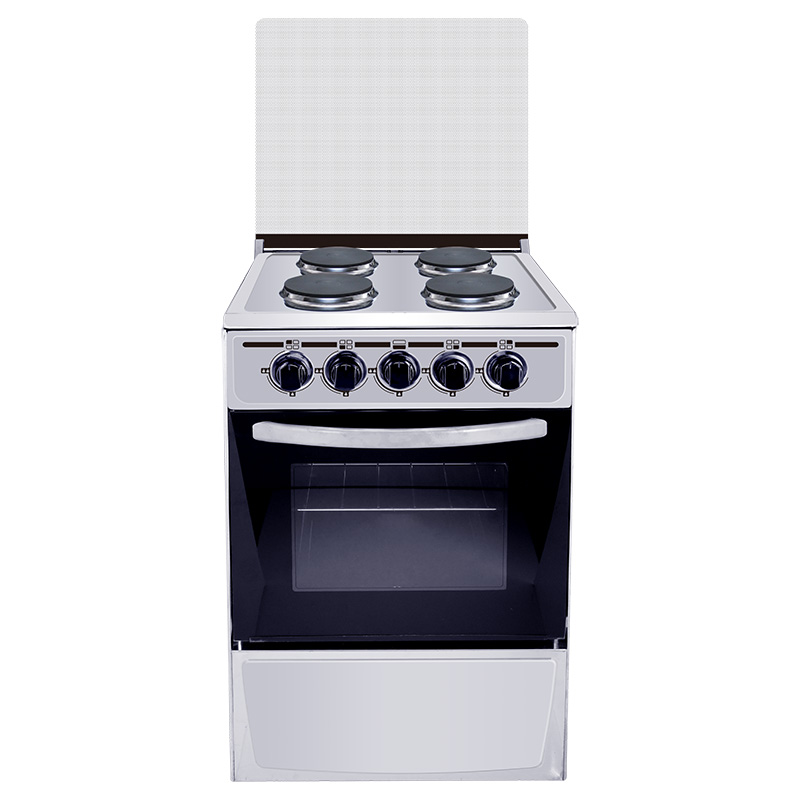
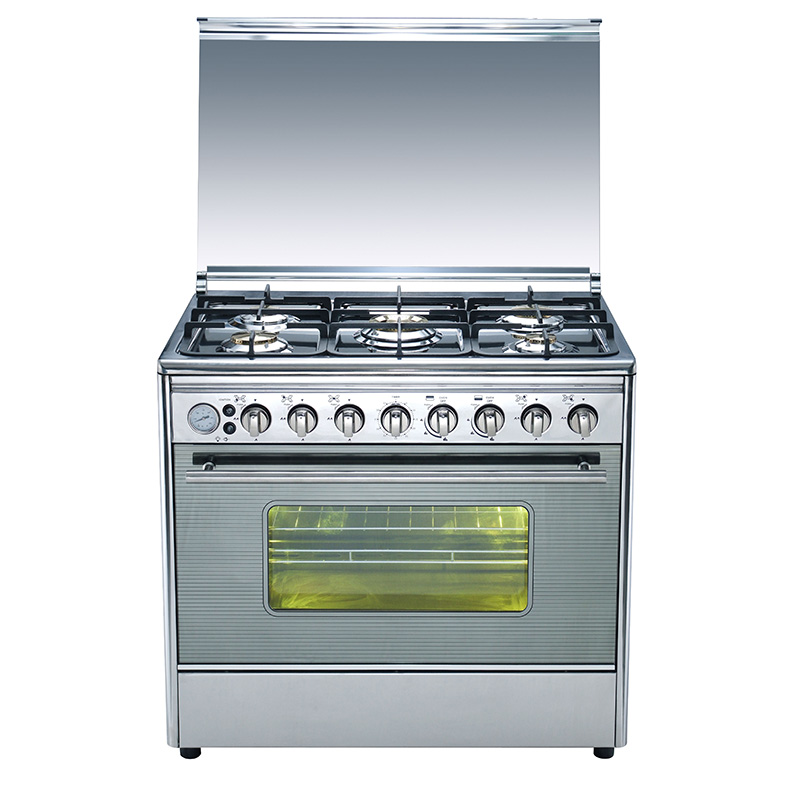
Compare JHL-L500(E4) and JHL-900(G5S) catalogue entries
The following catalog entries compare a smaller and a larger footprint. Reconfirm each figure and the exact configuration against a current model-specific specification sheet before ordering.
| Attribute | JHL-L500(E4) | JHL-900(G5S) |
|---|---|---|
| Body dimensions, W × D × H | 500 × 500 × 850 mm | 900 × 670 × 860 mm |
| Approximate body dimensions | 19.7 × 19.7 × 33.5 in. | 35.4 × 26.4 × 33.9 in. |
| Listed oven capacity | 52 L | 110 L |
| Listed oven power | 3,500 W | 3,980 W |
| Packing dimensions, W × D × H | 610 × 520 × 850 mm | 950 × 675 × 865 mm |
The JHL-L500(E4) entry is narrower and has a smaller listed capacity, making it a candidate to investigate where space is limited. The JHL-900(G5S) entry offers a larger listed capacity but requires substantially more width and depth. Neither comparison establishes the usable cavity dimensions, fuel type, included features, or destination-market configuration.
The listed oven power figures also should not be read as complete electrical specifications. Request the voltage, frequency, total appliance load, connection details, and scope of each power rating for the configuration being quoted. Neither model should be assumed to have any particular certification or market approval.
Review packaging dimensions and shipment planning
Use packing dimensions for initial freight and warehouse planning. The listed packs above differ materially in width and depth, which can affect how many units fit on a truck, in a container, or in a warehouse location.
Confirm these details before estimating an order’s landed cost or storage needs.
- Final packed dimensions and gross weight for each configuration.
- Whether accessories, racks, and documentation are packed inside the appliance or separately.
- Pallet dimensions, units per pallet, and whether palletization is included.
- Approved stacking limits and handling orientation.
- Packaging materials and protection for doors, controls, and external panels.
- Loading plan, shipment terms, and responsibility for freight and insurance.
- Labeling needed for warehouse identification and the destination market.
A simple volume calculation—packed width × depth × height—can help compare space requirements, but it does not establish the number of units that will fit in a shipment. Pallets, clearances, stacking restrictions, and container dimensions all affect the actual loading plan. Ask the supplier or freight provider for a verified plan.
Build an OEM/ODM specification and sample checklist
For a private-label or customized order, turn the shortlist into a written specification before approving a sample. Jinhuali offers OEM and ODM services. Confirm the available changes, minimum quantities, tooling costs, and lead times for the particular project.
Cover the following points in the specification and sample review.
- Record the exact model identity and dimensions, including body and packed dimensions, cavity dimensions, and listed capacity.
- Define the configuration, including oven functions, cooktop arrangement if applicable, controls, accessories, finish, and color.
- Specify the utilities, including fuel type, electrical ratings, connection details, and any conversion components.
- Approve the branding, including logo placement, control markings, rating labels, manuals, carton artwork, and language.
- Identify destination requirements for documentation, labeling, installation instructions, and evidence of conformity for the intended sales channel.
- Set sample-review criteria for physical measurements, finish, accessory count, operation, packaging, and conformity with the agreed specification.
- Agree on production controls, including the approved specification revision, inspection criteria, and authorization of changes.
- Document after-sales support, including spare parts, service information, warranty terms, and responsibility for defects or transit damage.
Record discrepancies in writing and agree on corrections before production. A sample is useful only if both parties know whether it represents the exact configuration to be delivered.
Keep dated photographs of the sample’s rating label, controls, accessories, and carton beside the approved specification. Receiving teams can then identify the agreed version when later shipments arrive.
Prepare a model-specific quotation request
A useful quotation request ties the commercial offer to a defined product. Send the supplier a separate line item for each model and configuration rather than requesting a price for a broad oven category.
Provide enough detail for the supplier to price a defined configuration.
- Exact model number and destination market.
- Required body dimensions, capacity, fuel type, and electrical configuration.
- Requested features, accessories, finish, branding, and packaging.
- Required documentation, labeling, and installation information.
- Estimated quantities and any desired quantity breaks.
- Sample requirements and the specification revision to be quoted.
- Requested shipping destination and delivery terms.
- Questions about minimum order quantity, lead time, payment, warranty, spare parts, and inspection.
Ask for the quotation to identify what is included, what is optional, and which specifications still need confirmation. Compare offers using the same scope of supply, including packaging, accessories, documentation, and any other items needed for your order.
For a next step, review the linked Jinhuali model entries above or send the model numbers, destination market, and configuration requirements for a model-specific discussion.